
In today’s increasingly digital world, businesses are embracing cloud services at an unprecedented rate. According to recent studies, 78% of organizations are now opting for hybrid and multi-cloud strategies, highlighting the growing complexity of cloud environments. While cloud adoption offers numerous advantages, it also brings new challenges, with security compliance being a top priority.
More than 60% of organizations experienced security incidents related to public cloud usage in 2024, and 54% of organizations struggle to maintain consistent regulatory standards across hybrid or multi-cloud environments.
Ensuring compliance with industry regulations is not just about avoiding penalties; it’s about building trust, securing sensitive data, and safeguarding your reputation.
Why Cloud Security Compliance Is Crucial for Businesses
Cloud security compliance is the practice of aligning with industry regulations, data protection laws, and security standards while operating in cloud environments. With 82% of organizations citing cloud cost management as one of their top security challenges, it is vital for businesses to ensure compliance for several reasons:
- Protecting Sensitive Data: Regulations like GDPR, HIPAA, and PCI DSS mandate robust security practices to protect customer and business data. 88% of organizations have attack paths that could lead to critical assets, making compliance crucial for data protection.
- Avoiding Heavy Penalties: Non-compliance can lead to substantial financial fines and costly legal actions.
- Building Customer Trust: Demonstrating compliance reassures customers that their personal and business data is being handled securely and responsibly.
- Preventing Reputational Damage: A breach of compliance can harm your brand’s reputation, leading to a loss of customer trust and investor confidence.
Emerging Security Compliance Regulations in 2024–2025
The compliance landscape is rapidly evolving, with several critical regulations taking effect:
- DORA (Digital Operational Resilience Act): This new EU regulation establishes comprehensive requirements for financial institutions’ digital operational resilience, including specific cloud security measures
- NIS2 Directive: Strengthening cybersecurity requirements across essential sectors with enhanced incident reporting obligations
- Data Sovereignty Requirements: Organizations must navigate increasingly complex cross-border data storage regulations, requiring careful consideration of data residency and transfer mechanisms
- AI Governance Framework: New requirements for AI system security, transparency, and compliance
- Cloud Security Reporting Requirements: New proposals requiring advanced AI and cloud firms to report on development activities, cybersecurity measures, and security testing results.
The Rise of Automated Compliance Solutions
The future of cloud compliance is increasingly automated, with several key trends emerging:
- AI-Powered Compliance: Implementation of AI-powered threat detection and automated compliance monitoring is becoming standard practice
- Zero Trust Architecture: The adoption of Zero Trust security models is accelerating, particularly in response to increased remote work scenarios
- Integrated DevSecOps: Security and compliance are being built into the development pipeline from the start
- Automated Cross-Cloud Monitoring: 70% of companies are now turning to cloud-based compliance solutions, up from 65% in 2023
These automation trends are helping organizations maintain consistent compliance across complex multi-cloud environments while reducing manual overhead and human error.
The Growing Complexity of Multi-Cloud Security Compliance
Recent research reveals concerning statistics about multi-cloud security challenges. The average multi-cloud estate has 351 exploitable attack paths that lead to high-value assets, highlighting the critical need for robust compliance measures. With more than 60% of organizations experiencing security incidents related to public cloud usage in 2024, the importance of maintaining consistent compliance across platforms cannot be overstated.
As many businesses now operate across multiple cloud providers, maintaining compliance becomes even more critical and complex. Each cloud provider — whether AWS, Azure, or Google Cloud — has its own set of security configurations, making it essential to ensure consistent compliance across platforms. Without a cohesive approach, businesses face increased risks of misconfigurations and gaps in security that could lead to compliance violations.
Solutions for Modern Cloud Security Compliance Challenges
As organizations face increasing complexity in multi-cloud environments, they need comprehensive solutions that provide unified visibility and control. Modern compliance platforms must address several key requirements:
- Automated Compliance Management
- Multi-Cloud Policy Enforcement
- Real-Time Monitoring and Response
- Integration Capabilities
How Gauntlet Security Ensures Comprehensive Cloud SecurityCompliance
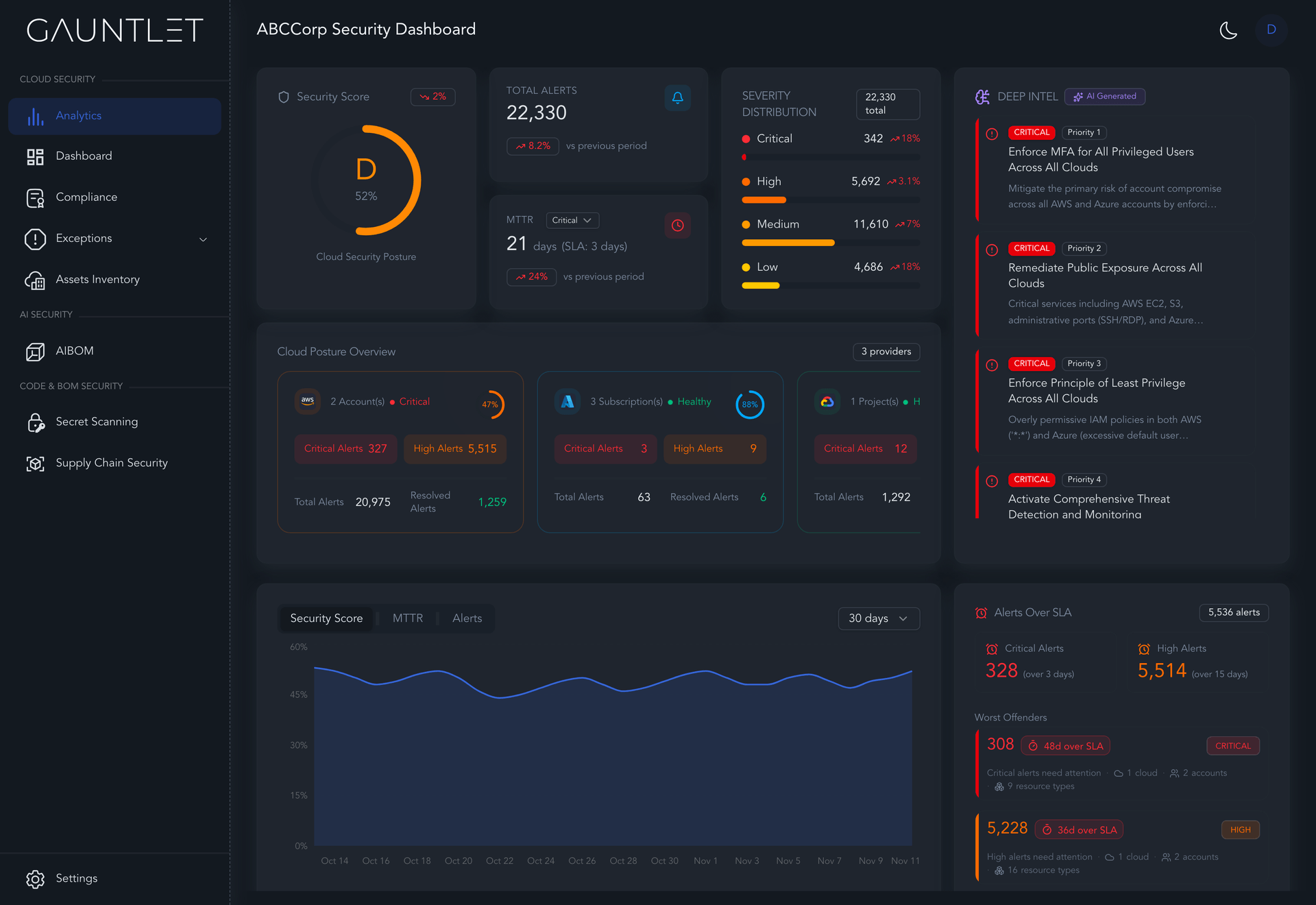
Gauntlet provides cutting-edge solutions designed to help organizations maintain security compliance in both single and multi-cloud environments. Their AI-powered cloud security platform enables organizations to demonstrate compliance with over 25 international security & regulatory standards, making it a comprehensive solution for modern businesses.
Leveraging Automation for Enhanced Compliance
The future of cloud compliance lies in automation. AI-powered compliance tools transform cybersecurity by automating risk assessment, monitoring, and incident response, ensuring robust data protection. Gauntlet’s platform embraces these trends by providing:
- Continuous automated compliance monitoring
- GenAI-driven threat detection and response
- ‘Snap-scan’ or instant scans to detect and report exposed secrets before they become public
- Predictive analytics for compliance risk assessment
- Automated compliance reporting and documentation
Comprehensive Security Compliance Automation
- Continuous automated compliance monitoring
- AI-driven threat detection and response
- Automated compliance audits against GDPR, HIPAA, PCI DSS, and CIS benchmarks
Unified Multi-Cloud Management
- Centralized oversight across AWS, Azure, and GCP
- Consistent policy enforcement
- Seamless integration with existing tools
Expert Support and Guidance
- Regular updates for new regulations
- Best practices and compliance strategy consulting
- Dedicated support team
Conclusion
Cloud security compliance is more than just a regulatory obligation; it is a cornerstone of business security, reputation, and trust. In an era where 58% of developers and security professionals expect higher risk in cloud security, maintaining robust compliance measures is crucial. For organizations operating in multi-cloud environments, maintaining consistent compliance across platforms can be daunting. However, with a powerful solution like Gauntlet, businesses can streamline compliance management, reduce risks, and ensure their operations remain secure and compliant.
Take Action Today:
- Assess your current cloud security compliance posture
- Identify gaps in your multi-cloud security strategy
- Implement automated security compliance monitoring
- Partner with experts who understand evolving regulations
Ready to strengthen your cloud compliance strategy? Visit Gauntlet and take the first step toward a secure, compliant future.
This article was first published on the Gauntlet blog on Medium.