
How Gauntlet & ComplyPlanet Simplify Governance and Continuous Security
India’s Digital Personal Data Protection Act, 2023 (DPDPA), fully operationalized through the Digital Personal Data Protection Rules, 2025, establishes a framework for how organizations collect, process, store, and protect digital personal data. As businesses increasingly rely on cloud platforms, SaaS applications, and interconnected systems, compliance requires clear visibility into where personal data resides, how it flows across environments, and whether adequate safeguards are in place. The Act also introduces technical security expectations under Rule 6, which focuses on implementing reasonable safeguards to prevent personal data breaches.
By combining the strengths of Gauntlet and ComplyPlanet, organizations can build a comprehensive path to DPDPA readiness. Gauntlet addresses the cybersecurity aspects, particularly the technical safeguards aligned with Rule 6 while ComplyPlanet manages the broader governance and compliance requirements of the Act. Together, we help organizations get started and build a structured approach to DPDPA compliance.
Looking for a deeper understanding of DPDPA obligations?ComplyPlanet has published a comprehensive guide that walks through the regulatory requirements in detail: DPDPA Compliance Guide

How Gauntlet Supports DPDPA Compliance
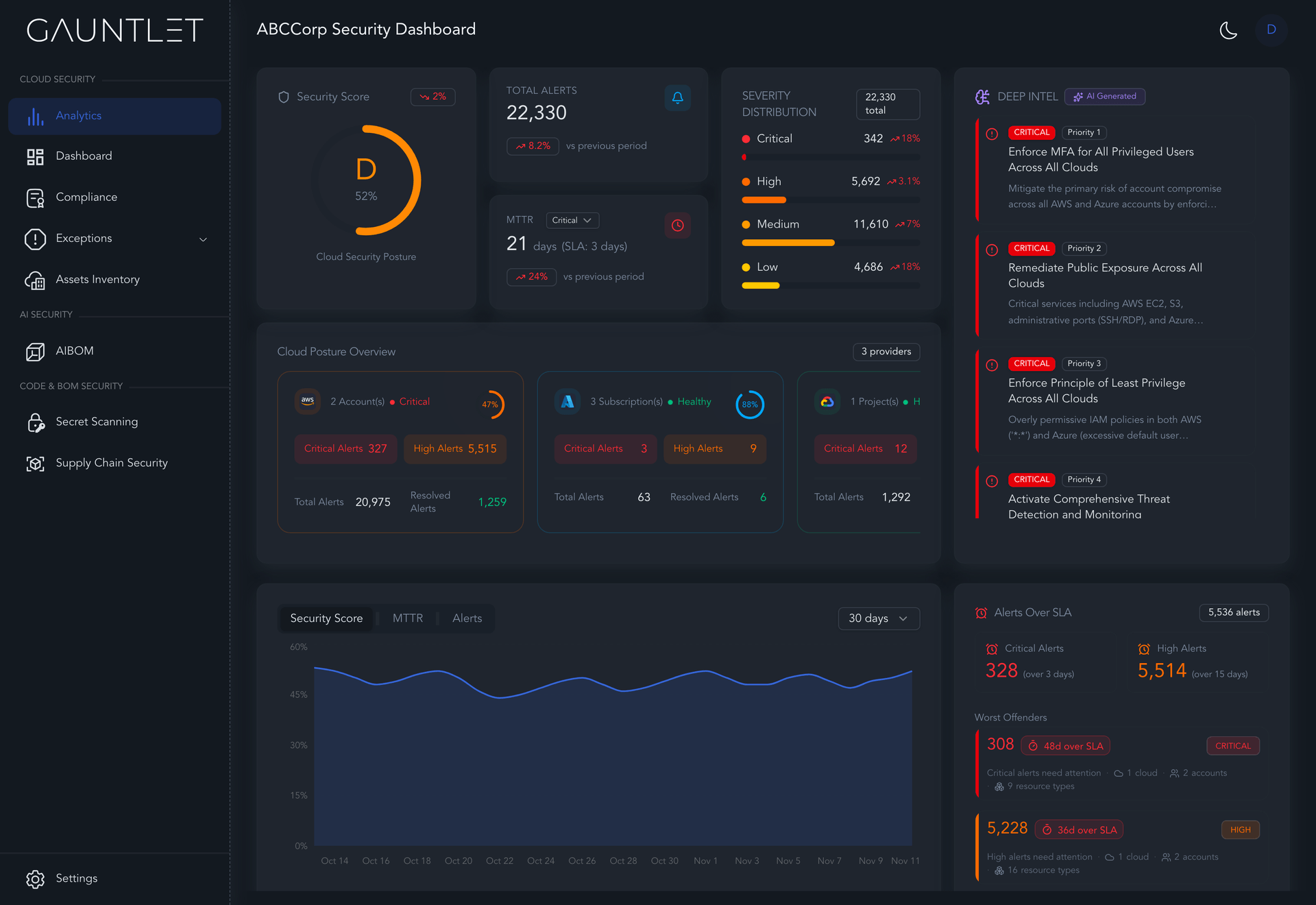
Compliance in modern cloud environments requires continuous monitoring rather than static audits. Under the Digital Personal Data Protection Act, 2023 (DPDPA), organizations must demonstrate ongoing accountability for protecting digital personal data. Gauntlet enables this through its GRC dashboard, which provides visibility into cloud misconfigurations, access control gaps, and other risks that could impact data security.
Aligning with Rule 6: Technical Safeguards for Personal Data
Rule 6 of the Digital Personal Data Protection Act, 2025 Rules establishes the baseline for “reasonable security safeguards” that Data Fiduciaries and Data Processors must implement to prevent personal data breaches. The rule requires both technical and organizational measures to protect personal data processed directly or through Data Processors.
Key safeguards include:
- Securing personal data through encryption, masking, obfuscation, or tokenization
- Implementing strict access controls for systems processing personal data
- Maintaining visibility into data access through logging, monitoring, and review
- Ensuring data availability through backup and recovery mechanisms
- Retaining logs and relevant data for investigation and incident response
- Establishing contractual safeguards with Data Processors
- Implementing organizational and technical controls to enforce security practices
In practice, these safeguards require organizations to maintain clear operational visibility into how personal data is accessed, processed, and protected across their cloud infrastructure. Gauntlet helps organizations proactively identify cloud risks that could impact personal data protection.
Gauntlet’s AI-powered platform aids in detection, alerting and remediating:
- Cloud misconfigurations that could expose sensitive data
- Excessive IAM permissions and violations of least-privilege principles
- Insecure network paths and cross-environment access risks
- And hundreds of other security weaknesses
These capabilities support several technical safeguard expectations outlined in Rule 6. The table below illustrates how Gauntlet capabilities align with the technical safeguard requirements defined under Rule 6.

Contextual Risk Intelligence for Faster Remediation
By correlating identity risks, configuration drift, and network exposure, Gauntlet delivers contextual intelligence rather than isolated alerts.
This allows security teams to prioritize remediation based on actual risk, reducing exposure windows and preventing minor gaps from escalating into compliance issues.
Simplifying Audit Readiness and Regulatory Alignment
Gauntlet also simplifies regulatory alignment through centralized dashboards mapped to DPDPA and other compliance frameworks.
Key capabilities include:
- Automated control validation and continuous compliance scoring
- Real-time posture tracking across multi-cloud environments
- Evidence collection supporting audit and regulatory review
- Streamlined, audit-ready reporting
Conclusion: Building Complete DPDPA Readiness
The Digital Personal Data Protection Act, 2023 marks a major step toward stronger data governance in India’s digital economy. For organizations, achieving compliance requires more than legal documentation or isolated security controls. It demands a coordinated approach that addresses both governance obligations and the technical safeguards required to protect personal data.
This is where the combined strengths of ComplyPlanet and Gauntlet become valuable. ComplyPlanet supports the governance and compliance layer of DPDPA by including privacy policies, consent management, DPIA workflows, and data subject rights handling. Gauntlet complements this by enforcing the guidance set & audited by ComplyPlanet. We do that by addressing the technical security aspects, particularly the safeguards outlined under Rule 6, through cloud risk visibility, continuous monitoring, and security posture management.
Together, the two companies provide organizations with a unified approach to DPDPA readiness by bridging the gap between regulatory compliance and operational security. By integrating governance processes with continuous cloud security oversight, organizations can build a defensible compliance posture while strengthening the protection of personal data across modern cloud environments.

Reach out to us at:
This article was first published on the Gauntlet blog on Medium.